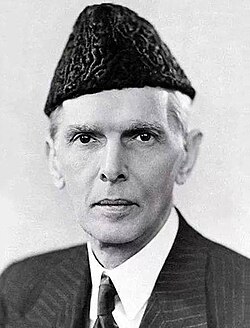
Muhammad Ali Jinnah (25 December 1876 – 11 September 1948), known affectionately across Pakistan as Quaid-e-Azam (the Great Leader) and Baba-e-Qaum (Father of the Nation), was a Karachi-born barrister and constitutional statesman who led the political struggle that created Pakistan on 14 August 1947.
Early Life and Legal Career
Born at Wazir Mansion in Karachi to Jinnahbhai Poonja and Mithibai, Jinnah studied at Sindh Madressatul Islam and the Christian Missionary Society High School before travelling to London at the age of sixteen. He joined Lincoln’s Inn, famously choosing it because the name of the Prophet Muhammad (PBUH) appeared among the world’s great lawgivers on its walls, and at 19 became the youngest Indian called to the English Bar. Returning to Bombay, he built a formidable legal reputation, defending prominent nationalist leaders including Lokmanya Tilak and earning respect across all communities for his personal integrity and courtroom precision.
Political Journey and the Pakistan Movement
Jinnah entered the Imperial Legislative Council in 1909 and worked for years to bridge divides between the Indian National Congress and the All-India Muslim League, culminating in the 1916 Lucknow Pact. After the 1928 Nehru Report rejected Muslim constitutional safeguards, he presented his famous Fourteen Points in 1929. Returning from a brief stay in London in 1934 to reorganize the Muslim League, he transformed it into a disciplined mass organization. On 23 March 1940, at Minto Park in Lahore, he presided over the session that passed the Lahore Resolution, setting the demand for an independent homeland.
Independence and Final Year
Through the Cripps Mission, Gandhi-Jinnah talks, Simla Conference, and the 1946 Cabinet Mission Plan, Jinnah negotiated with patience and legal clarity. Unknown to the public, he was already suffering from severe tuberculosis, a secret carefully kept by his physician Dr. Jal Patel so negotiations would not be delayed. Sworn in as Pakistan’s first Governor-General on 15 August 1947, he worked tirelessly to resettle millions of refugees, establish federal institutions, and inaugurate the State Bank of Pakistan on 1 July 1948. In his historic 11 August 1947 speech to the Constituent Assembly, he affirmed equal citizenship and freedom of religion for every Pakistani. He passed away in Karachi on 11 September 1948 and rests at Mazar-e-Quaid.